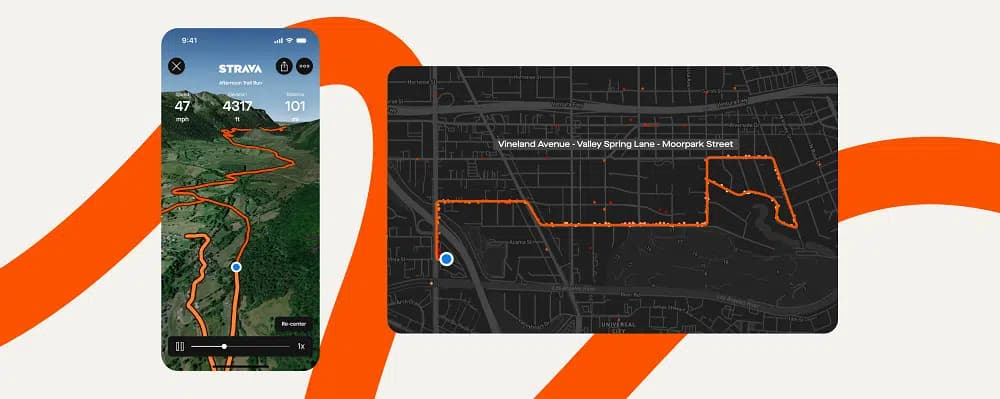
Strava turns a solitary action—recording a run or ride—into a social object. Activities create a feed, the feed creates reactions, reactions create motivation, and motivation creates more activities.
This is sustainable growth because acquisition and retention share the same mechanism. The community is not a tab added after the core product; it is wrapped around the behavior users already came to perform.
Make the core action shareable by default
An activity contains distance, time, route, effort, photos, and a personal story. It is useful to the athlete and interesting to others.
Find the smallest unit of value your users naturally create. Package it so sharing requires little extra work and still respects privacy.
Create lightweight ways to respond
Kudos and comments let people acknowledge effort without writing a long message. Low-friction feedback increases the chance that a contribution feels seen.
Design reactions around the emotion of your product—encouragement, celebration, progress, insight—not generic engagement for its own sake.
Turn progress into identity
Repeated activities build a visible record of who someone is becoming. Identity strengthens commitment because leaving means abandoning more than data.
Show meaningful history, milestones, consistency, and improvement. Avoid manufacturing anxiety; the record should help users recognize earned progress.
Use challenges to synchronize behavior
Challenges give many people a reason to act during the same period. Shared timing makes individual effort feel part of something larger.
Create goals that are achievable, relevant, and easy to understand. A challenge should deepen the core habit, not distract from it.
Let smaller communities create belonging
Clubs and local groups make a large network feel personal. Relevance increases when users recognize the place, interest, pace, or people around them.
Give communities enough tools to organize and express identity while keeping discovery safe and comprehensible for a new user.
Make sharing bring recipients back
A shared activity can introduce a non-user to the experience, while a notification can return an existing user to the feed. Each interaction has a natural re-entry point.
Map every outbound object to a useful landing experience. The recipient should understand the value before being asked to install or sign in.
Protect trust as the network grows
Location and health data make privacy central, not optional. Growth loops fail when participation feels unsafe or exploitative.
Explain controls clearly, choose privacy-respecting defaults, and audit what appears in screenshots, links, notifications, and search results.
Put the playbook into practice
A community loop works when contribution improves the product for the contributor and creates value for someone else. That second person then has a reason to respond or contribute in turn.
hiaso can help community apps capture the demand these loops create by tracking brand and use-case searches, refining metadata, studying category competitors, and localizing the proposition for new markets.

YasserFounder of hiaso